Ever wondered about the unsung heroes soaring through the skies, protecting a nation that’s risen from the ashes? I’ve always been fascinated by how air power shapes history, and for South Korea, the story of its fighter jets is nothing short of incredible.
From humble beginnings after a devastating war to developing their very own cutting-edge 4.5-generation stealth fighter like the KF-21 Boramae, the Republic of Korea Air Force (ROKAF) has truly transformed.
It’s not just about the planes; it’s about the grit, innovation, and strategic vision that built a formidable aerial defense, reflecting the nation’s own rapid ascent on the world stage.
You see, understanding where they are now means understanding the incredible journey they’ve taken, and trust me, it’s a saga packed with innovation and strategic shifts.
So, grab a coffee, because we’re about to embark on a fascinating journey through the Korean Air Force’s fighter jet legacy, from its earliest days to its ambitious future.
Let’s delve deeper into this powerful evolution!
From Scraps to Skies: The Early, Grueling Days
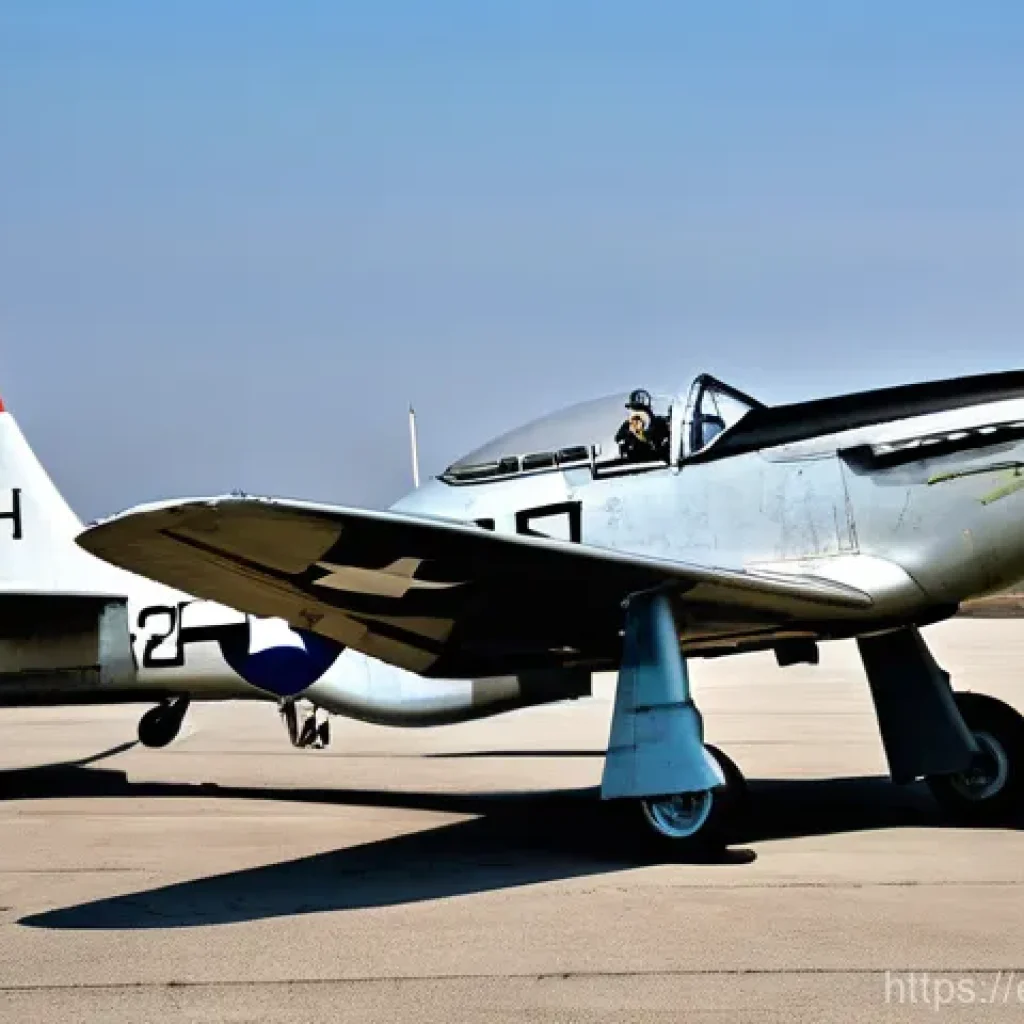
It’s truly incredible when you think about where the Republic of Korea Air Force (ROKAF) started. After the devastation of the Korean War, the ROKAF was practically built from the ground up, literally with scraps and cast-offs from its allies.
I mean, imagine trying to defend a nation with a handful of propeller-driven F-51 Mustangs while your neighbor is already fielding MiG-15s! That early period wasn’t just tough; it was an exercise in sheer, unadulterated grit and determination.
From what I’ve read and seen, the dedication of those early pilots and ground crews was nothing short of heroic. They didn’t just fly; they learned, they innovated, and they painstakingly maintained every single aircraft as if their lives, and the nation’s future, depended on it – because frankly, they did.
It makes you really appreciate the foundation laid by those pioneers, facing overwhelming odds but refusing to give up on the dream of a robust aerial defense.
The stories of their resourcefulness, making do with whatever was available and pushing those machines to their absolute limits, are truly inspiring. It wasn’t about having the best technology; it was about having the best spirit, and that, in my opinion, makes all the difference.
This foundational period instilled a deep sense of self-reliance and unwavering resolve, qualities that would become hallmarks of the ROKAF’s journey.
The Post-War Revival: Learning to Fly Again
You know, it’s easy to look at today’s high-tech air forces and forget the painstaking journey many nations took to get there. For South Korea, the immediate post-war era was a desperate scramble to establish any semblance of air power.
I often think about what it must have felt like for those first cadets, training in makeshift facilities, eager to defend a country still scarred by conflict.
They were flying ex-USAF F-51 Mustangs, legendary aircraft in their own right, but aging rapidly in the face of the burgeoning jet age. This wasn’t just about pilot training; it was about building an entire ecosystem from scratch – maintenance, logistics, air traffic control, all with limited external support and even more limited internal resources.
The challenge wasn’t merely technical; it was organizational and psychological, demanding immense resolve. The sheer effort required to get those planes in the air, keep them flying, and train new generations of aviators is a testament to the unyielding spirit that has come to define South Korea’s journey.
It truly paints a picture of a nation determined to not only survive but thrive, even when starting from what seemed like impossible odds.
Overcoming Adversity: Limited Resources, Unlimited Spirit
The tales from that period really highlight how much can be achieved with sheer willpower. I’ve often heard stories about pilots and mechanics in those early days improvising repairs, sharing precious spare parts, and going above and beyond their duties to keep the few aircraft they had operational.
Can you imagine the pressure? Every single flight, every successful sortie, was a small victory against the looming threat. Resources were scarce, budgets were tight, and the technological gap between them and potential adversaries was vast.
Yet, instead of being deterred, they were fueled by an indomitable spirit. This wasn’t just about military strategy; it was about national pride and the collective will to rebuild and protect.
It taught them valuable lessons in self-reliance and creative problem-solving, skills that would prove invaluable as the ROKAF embarked on its ambitious modernization path.
From my perspective, this early adversity forged a strong, resilient foundation, instilling a culture of innovation and determination that continues to define the Korean Air Force even today.
A Leap of Faith: Acquiring Advanced Hardware
Moving beyond the propeller age was a monumental task for the ROKAF, especially given the continuous security challenges it faced. I’ve always been fascinated by how nations navigate these critical junctures, and for South Korea, the transition to jet aircraft marked a definitive turning point.
It wasn’t just about getting faster planes; it was about stepping into a completely new era of aerial warfare, demanding different skill sets, more complex infrastructure, and significantly higher operational costs.
This phase truly tested the nation’s resolve and its ability to secure vital alliances. I can only imagine the sheer excitement, mixed with daunting responsibility, that the first jet pilots must have felt as they climbed into the cockpit of an F-86 Sabre.
This wasn’t merely an upgrade; it was a qualitative jump that dramatically altered the strategic landscape. The decision to invest heavily in modern air power, even when resources were still comparatively scarce, showcased a clear, forward-thinking vision for national defense that truly paid off in the long run.
It set the stage for all the incredible advancements that followed, demonstrating a commitment to air superiority that has only grown stronger over the decades.
Beyond Propellers: Jet Age Dawn
The arrival of the F-86 Sabre in the late 1950s was nothing short of revolutionary for the ROKAF. From my understanding, moving from the F-51 Mustang to the F-86 was like going from a vintage car to a sports car – a completely different beast!
These were frontline fighters, capable of supersonic speeds and armed with radar, features that were unimaginable just a few years prior. This wasn’t just about the planes themselves; it necessitated a complete overhaul of pilot training, maintenance procedures, and ground support systems.
Pilots had to adapt to higher speeds, new combat tactics, and more sophisticated avionics. It truly marked the beginning of modern air combat for South Korea, allowing them to counter potential threats with much greater effectiveness.
The strategic implications were profound, providing a credible deterrent and a level of air defense that simply hadn’t existed before. It was a clear signal that the ROKAF was serious about building a contemporary air force, even if it meant stretching its capabilities and resources to the absolute limit.
Strategic Acquisitions: Building a Foundation
As the decades progressed, the ROKAF continued its methodical process of acquiring more advanced aircraft, constantly balancing its defense needs with its economic capabilities.
I recall reading about the introduction of aircraft like the F-5 Freedom Fighter and later the F-4 Phantom II. These jets, while not always the absolute bleeding edge of technology globally, were incredibly potent for their time and significantly bolstered South Korea’s air defense capabilities.
The F-4 Phantom, in particular, was a true workhorse – a multi-role fighter that could handle air-to-air combat, ground attack, and reconnaissance. It offered a level of versatility and destructive power that was previously unimaginable.
This phase wasn’t just about buying planes; it was about building relationships with key international partners, particularly the United States, which provided essential training, logistics, and technological transfers.
From my perspective, this careful, phased approach to modernization allowed the ROKAF to gradually build its operational experience and technical expertise, laying a solid foundation for more ambitious indigenous programs in the future.
The KF-16 Era: A Strategic Partnership Takes Flight
The introduction of the KF-16 Fighting Falcon marked another pivotal moment in the ROKAF’s history, one that I find particularly fascinating because it blended acquisition with a significant leap in local capabilities.
This wasn’t just an off-the-shelf purchase; it was a comprehensive program designed to transfer critical technology and foster domestic aerospace expertise.
For many nations, acquiring a modern fighter jet like the F-16 is a massive undertaking, but for South Korea, it became a cornerstone of its industrial growth.
I remember thinking how smart this strategy was – not just getting advanced aircraft, but also the knowledge to maintain, upgrade, and even build parts for them.
This strategic decision drastically enhanced the ROKAF’s operational readiness and reduced its long-term reliance on external support for maintenance and upgrades.
It was a tangible demonstration of South Korea’s burgeoning industrial prowess and its commitment to developing a truly sovereign defense capability, moving beyond simply being a recipient of aid to becoming a global player in its own right.
The F-16’s Impact: Modernizing the Fleet
The F-16 Fighting Falcon, affectionately known as the “Viper” by pilots, transformed the ROKAF’s capabilities overnight. When these jets started rolling out, it was like a massive adrenaline shot for the entire air force.
With its advanced avionics, beyond-visual-range missile capabilities, and superb maneuverability, the F-16 was a generational leap compared to its predecessors.
Suddenly, ROKAF pilots had a formidable platform that could hold its own against virtually any regional threat. From what I’ve observed, this wasn’t just about the hardware; it also instilled a new level of confidence and professionalism throughout the ranks.
The F-16 brought with it modern combat doctrines and training methodologies, pushing the ROKAF to adopt Western standards of aerial warfare. It provided the backbone of the air force for decades, proving its versatility in various roles and ensuring air superiority for South Korea in a rapidly evolving geopolitical landscape.
Local Production and Know-How: The KF-16 Program
What truly set the KF-16 program apart was the emphasis on local production and technology transfer. Instead of simply buying fully assembled aircraft, South Korea entered into a co-production agreement that allowed its domestic aerospace industry to participate in the manufacturing process.
I’ve always seen this as a brilliant long-term play. Companies like Korea Aerospace Industries (KAI) gained invaluable experience in assembling, testing, and even manufacturing components for these complex machines.
This wasn’t just about building planes; it was about building an industrial base, nurturing a skilled workforce, and developing the engineering expertise required for future indigenous projects.
This knowledge transfer was absolutely critical. It meant that South Korea wasn’t just operating advanced fighters; it was actively participating in their creation, ensuring greater self-reliance for maintenance and future upgrades, which significantly reduced operational costs and increased strategic independence.
Homegrown Ambitions: The Ascent of Indigenous Innovation
The journey from simply assembling foreign aircraft to designing and building their own has been one of the most remarkable transformations for South Korea’s aerospace industry and its air force.
I’ve personally found this trajectory incredibly inspiring because it showcases a nation’s unwavering commitment to self-reliance and innovation. It’s one thing to acquire advanced technology, but it’s an entirely different, and far more challenging, endeavor to develop it from scratch.
This phase was about taking those lessons learned from co-production programs and applying them to ambitious domestic projects. The development of aircraft like the KT-1 Woongbi and the T-50 Golden Eagle weren’t just about creating new planes; they were about proving to the world, and more importantly, to themselves, that South Korea had the engineering prowess and strategic vision to stand on its own feet in the highly competitive global aerospace market.
It required significant investment, countless hours of research and development, and overcoming numerous technical hurdles, but the payoff, in terms of national pride and technological independence, has been immeasurable.
| Aircraft | Era | Role | Key Feature |
|---|---|---|---|
| F-51 Mustang | Early Post-War | Fighter/Ground Attack | Piston-engine workhorse, vital for early ROKAF |
| F-86 Sabre | Mid-Cold War | Air Superiority | ROKAF’s first jet fighter, crucial modernization step |
| KF-16C/D Fighting Falcon | Modernization & Co-production | Multi-role Fighter | Advanced avionics, precision strike, technology transfer cornerstone |
| T-50 Golden Eagle | Indigenous Development | Lead-in Fighter Trainer | Supersonic trainer, light attack capability, export success |
| KF-21 Boramae | Future & Advanced Development | 4.5 Gen Multi-role | Semi-stealth, AESA radar, indigenous design, future backbone |
KT-1 Woongbi and T-50 Golden Eagle: Stepping Stones
The KT-1 Woongbi advanced trainer aircraft was a monumental first step, proving that South Korean engineers could design and build an aircraft from the ground up.
This project, I believe, instilled incredible confidence within KAI and the ROKAF. Building on that success, the T-50 Golden Eagle program was truly a game-changer.
I remember being so impressed when I first learned about it – a supersonic advanced jet trainer with light attack capabilities, designed entirely in South Korea!
This wasn’t just an engineering feat; it was a strategic masterstroke. The T-50 not only provides top-tier training for ROKAF pilots but has also become a successful export product, demonstrating South Korea’s capability to compete on the global stage.
It showed that the experience gained from programs like the KF-16 had genuinely paid off, nurturing a domestic industry capable of world-class innovation.
It laid the groundwork for even more ambitious projects, solidifying the idea that indigenous development wasn’t just a dream, but a tangible reality.
Aspiring for Autonomy: The Drive for Self-Reliance
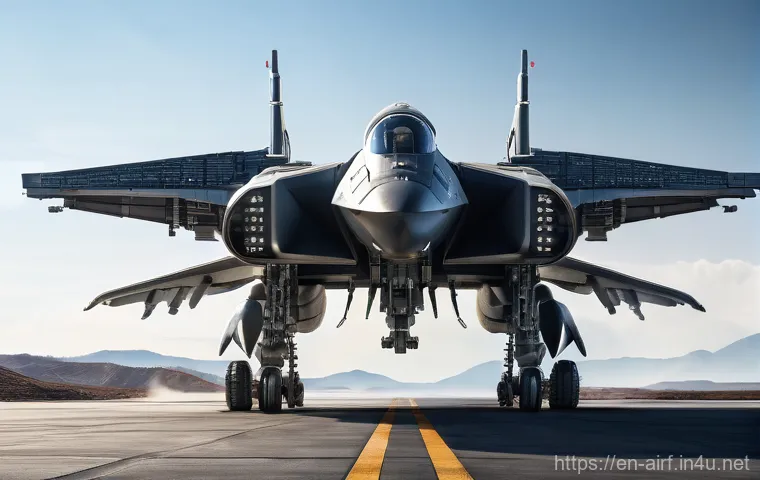
This push for indigenous development goes far beyond simple economics or pride; it’s about strategic autonomy. Relying solely on foreign suppliers for critical defense assets leaves a nation vulnerable to political pressures and technological limitations.
From my perspective, South Korea learned this lesson early and hard. The drive for self-reliance in aerospace was a conscious, long-term national strategy to ensure that its air force would always have access to the best technology, tailored to its specific defense needs, without external constraints.
This means investing in local R&D, fostering a robust domestic defense industry, and developing a skilled workforce that can innovate and adapt. It’s a continuous cycle of learning, building, and refining, all aimed at creating a truly independent and cutting-edge aerospace capability.
This commitment is what makes the ROKAF’s story so compelling – it’s a narrative of never settling, always striving for more, and ultimately achieving greater independence through sheer intellectual and industrial might.
Guardians of Tomorrow: Stealth, AI, and the KF-21 Boramae
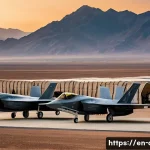
And now, we arrive at the crown jewel of South Korea’s indigenous aerospace ambition: the KF-21 Boramae. When I first saw the prototypes and read about its capabilities, I literally got goosebumps.
This isn’t just another fighter; it’s a testament to decades of planning, investment, and relentless innovation, culminating in a 4.5-generation stealth fighter developed almost entirely by South Korean engineers and technicians.
It’s a moment of national pride that resonates deeply, signifying South Korea’s entry into an elite club of nations capable of developing such advanced aerial platforms.
The Boramae represents a monumental leap, integrating semi-stealth features, advanced avionics, and a sophisticated AESA radar system, all designed to meet the specific demands of modern air combat.
I believe this aircraft will fundamentally alter the regional power balance, providing the ROKAF with a credible, high-performance asset that ensures air superiority for generations to come.
It’s a tangible symbol of their technological prowess and their unyielding commitment to national defense, projecting strength and deterring potential threats in an increasingly complex world.
The KF-21’s Promise: A 4.5 Generation Game Changer
The KF-21 Boramae isn’t just an upgrade; it’s a strategic revolution for the ROKAF. Its advanced capabilities place it firmly in the 4.5-generation category, bridging the gap between current fourth-generation fighters and full fifth-generation stealth aircraft.
What truly impresses me are its semi-stealth features, designed to reduce its radar cross-section, making it harder for adversaries to detect and track.
Coupled with its advanced active electronically scanned array (AESA) radar, also developed domestically, the Boramae offers superior situational awareness and targeting capabilities.
This means ROKAF pilots will have a significant advantage in identifying threats and engaging them effectively, often before they are even aware of the Boramae’s presence.
This level of technological integration and indigenous design capability is genuinely astonishing, showcasing the incredible progress made by South Korea in less than a century.
It’s clear that the KF-21 is engineered not just for today’s threats, but with a keen eye on the evolving challenges of tomorrow’s aerial combat environment.
Future Vision: Integrating Advanced Technologies
Looking ahead, the KF-21 Boramae isn’t just a platform; it’s a foundation for future technological integration. I anticipate seeing further advancements, like enhanced artificial intelligence for mission planning and pilot assistance, as well as seamless integration with unmanned aerial vehicles (UAVs) in manned-unmanned teaming (MUM-T) concepts.
This kind of forward-thinking vision is what truly excites me about the ROKAF’s future. They’re not just building a plane; they’re building an adaptable system that can evolve with emerging threats and technologies.
Imagine pilots in the Boramae commanding a swarm of drones, extending their sensor reach and combat effectiveness! The potential is immense. Furthermore, the Boramae acts as a catalyst for continued domestic research and development, ensuring that South Korea remains at the forefront of aerospace innovation.
This commitment to ongoing technological advancement means the ROKAF won’t just keep pace; it will be setting new standards for air power in the Asia-Pacific region and beyond.
Beyond the Horizon: ROKAF’s Evolving Global Role
As the ROKAF continues to develop its advanced capabilities, its role on the global stage is also expanding. I’ve always believed that a nation’s military strength, particularly its air power, is a significant indicator of its international standing, and South Korea’s ascent in this regard is undeniable.
It’s no longer just about defending its own borders; the ROKAF is increasingly participating in international exercises, humanitarian missions, and even projecting its technological expertise through defense exports.
This shift isn’t just about showing off advanced jets like the T-50 or potentially the KF-21; it’s about demonstrating a commitment to regional stability and global security.
From my observations, this evolution reflects South Korea’s broader transition into a mature, responsible global actor, willing and able to contribute to collective defense and peace efforts.
It’s a testament to how far they’ve come, transforming from a nation that once relied heavily on foreign aid for its defense into a key partner and innovator in global security discussions.
The journey is far from over, but the direction is clear: upwards and outwards.
International Partnerships and Exercises
One of the most visible signs of the ROKAF’s evolving role is its increasing participation in multinational military exercises. I’ve seen countless reports about their involvement in drills alongside forces from the United States, Australia, and other allied nations.
These exercises are crucial not just for honing combat skills but also for building interoperability and strengthening strategic alliances. It’s about learning from each other, sharing best practices, and ensuring that, in a crisis, allied forces can work seamlessly together.
From a personal perspective, seeing ROKAF F-15Ks or KF-16s flying in complex scenarios with other air forces really underscores their professionalism and competence.
These aren’t just training events; they are diplomatic tools, demonstrating South Korea’s commitment to collective security and its capacity to operate effectively within a broader international framework.
This active engagement enhances their credibility and deepens the trust among allied nations, which is absolutely vital in today’s volatile world.
Projecting Power and Peace in a Changing World
The ROKAF’s burgeoning capabilities, exemplified by projects like the KF-21, position South Korea not just as a regional power but as a significant contributor to global peace and stability.
This isn’t just about military might; it’s about the ability to support humanitarian efforts, participate in peacekeeping operations, and engage in defense diplomacy.
I believe this expanded role is a natural progression for a nation that has achieved such remarkable economic and technological development. When a country can build its own advanced fighter jets and export successful trainers like the T-50, it earns a certain level of respect and influence on the international stage.
This projection of power, coupled with a commitment to peaceful resolutions, creates a balanced and effective foreign policy tool. The ROKAF, in my eyes, is becoming a key player in shaping the future of air power and security, not just in Northeast Asia, but across the wider Indo-Pacific region, proving that true strength lies in a blend of innovation, capability, and unwavering dedication to a secure future.
Closing Thoughts
Wow, what a journey we’ve explored together! It’s truly remarkable to reflect on the Republic of Korea Air Force’s transformation from those incredibly challenging post-war beginnings to the powerhouse it is today. From operating prop-driven Mustangs to developing advanced indigenous fighter jets like the KF-21 Boramae, their story is a testament to unwavering national resolve, strategic vision, and an insatiable drive for innovation. It’s more than just an air force; it’s a symbol of South Korea’s resilience and its determination to secure its future on its own terms. As an observer, I find their dedication to self-reliance and technological excellence utterly inspiring, proving that with enough grit and smart planning, anything is possible.
Useful Information to Know
Here are a few extra nuggets of information that I think you’ll find super interesting, especially if you’re as fascinated by aerospace and national defense as I am:
-
The Republic of Korea Air Force (ROKAF) is currently ranked among the top air forces globally. In 2025, Global Firepower ranks South Korea’s military strength as 5th out of 145 countries, highlighting its significant aerial assets and capabilities.
-
The KF-21 Boramae program is moving at an impressive pace! As of July 2025, South Korea has completed critical test flights of the sixth prototype, with the Block 1 phase nearing completion. The first batch of approximately 20 KF-21 jets is slated for delivery between 2026 and 2027, with plans to manufacture up to 120 by the early 2030s to replace aging F-4 and F-5 fleets.
-
South Korea isn’t just building aircraft for itself; its T-50 Golden Eagle advanced jet trainer has been a significant export success. This demonstrates not only its engineering prowess but also its growing influence in the global defense market, providing high-performance, cost-effective solutions to allied nations.
-
The ROKAF operates advanced airborne early warning and control (AEW&C) aircraft, specifically the Boeing E-7 Wedgetail (known as “Peace Eye” in South Korea). These aircraft are crucial for maintaining comprehensive situational awareness and command over its airspace, making the ROKAF a formidable force.
-
Beyond manned aircraft, the ROKAF also employs sophisticated unmanned aerial vehicles (UAVs). For instance, it operates Northrop Grumman RQ-4 Global Hawk high-altitude surveillance drones, which provide crucial intelligence, surveillance, and reconnaissance (ISR) capabilities over long distances.
Key Takeaways
To sum up our deep dive into the ROKAF’s incredible journey, here are the crucial points that I personally believe truly stand out and make their story so compelling:
-
From Adversity to Air Power: The ROKAF’s evolution from post-Korean War scraps to a modern, technologically advanced air force is a powerful narrative of resilience and unwavering national will. It truly highlights what can be achieved with sheer determination against overwhelming odds.
-
Strategic Modernization through Partnerships: While the drive for self-reliance is strong, the ROKAF’s growth was also significantly bolstered by strategic international partnerships, particularly with the U.S. These alliances facilitated crucial technology transfers and provided access to cutting-edge aircraft like the F-86 and F-16, which were vital for its modernization.
-
Indigenous Innovation as a Cornerstone: The transition from licensed production to developing homegrown aircraft like the KT-1, T-50, and most notably, the KF-21 Boramae, marks a profound shift. This commitment to domestic R&D ensures strategic autonomy and positions South Korea as a serious player in the global aerospace industry. I mean, building your own stealth-capable fighter? That’s next level!
-
A Growing Global Contributor: The ROKAF is no longer just a defensive force; its increasing participation in international exercises and its successful defense exports showcase its expanding role as a responsible and capable contributor to regional and global security. It’s really cool to see them step up on the world stage!
-
Future-Proofing Through Advanced Tech: With the KF-21 Boramae entering mass production, South Korea is clearly invested in integrating future technologies like advanced AI and manned-unmanned teaming. This forward-thinking approach ensures the ROKAF remains at the forefront of air power, ready to face the challenges of tomorrow.
Frequently Asked Questions (FAQ) 📖
Q: What kind of fighter jets did South Korea start with after the Korean War, and how did they build up their air force from such humble beginnings?
A: It’s truly remarkable when you look back at the ROKAF’s roots right after the devastating Korean War. They pretty much started from scratch! When the war broke out in June 1950, the ROKAF was incredibly small, with just about 1,800 personnel and a meager fleet of only 20 trainers and liaison aircraft.
Imagine facing a formidable adversary with just that! Their initial combat aircraft were the North American F-51D Mustangs. These piston-engine fighters, veterans of WWII, were literally flown in by a contingent of U.S.
Air Force instructor pilots as part of the “Bout One Project” and became their first real fighter-bombers. The ROKAF used these F-51s for crucial ground support and independent sorties, which was incredibly brave given the circumstances.
By the time the ceasefire was signed in 1953, the ROKAF had significantly expanded, boasting 78 F-51s among its 118 aircraft. What really gets me is the sheer determination involved.
There’s even a fascinating bit of history from the 1970s where, amidst economic struggles, the South Korean government actually raised funds through national donations to acquire more American F-4 Phantoms – a symbol of their unwavering commitment to defense.
It wasn’t just about buying planes; it was a nation pouring its heart and soul into securing its skies. The F-4 Phantoms themselves, nicknamed the “Goblin of the Sky” by Koreans, were a state-of-the-art fighter in the 1960s and served for an incredible 55 years with the ROKAF, finally being honorably retired in June 2024.
Talk about getting your money’s worth and then some!
Q: How did the ROK
A: F transition from relying on donated or purchased foreign aircraft to developing its own advanced capabilities? A2: This is where the story gets really inspiring for me!
For decades, the ROKAF primarily operated U.S.-made aircraft, which was vital for their defense. We saw the F-51 Mustangs, and then came the Northrop F-5E Tiger IIs in August 1974, and later the powerful F-4 Phantoms.
These were the backbone of their air defense for a long time. However, I’ve always believed that true strength comes from self-reliance, and South Korea clearly shared that vision.
The real game-changer was the strategic shift towards indigenous development. They started by producing Korean variants of the F-5E, called the Jegong-ho, in 1982.
This was a huge step, showing their growing industrial capability. The modernization continued with the introduction of the F-16 in April 1986, and the F-15K in October 2005, followed by the F-35A in March 2019.
But the ultimate leap came with the KF-X program, now known as the KF-21 Boramae. This ambitious project, launched in 2015, aimed to replace their aging F-4E Phantom II and F-5E/F Tiger II aircraft with a domestically produced, advanced multi-role fighter.
It’s a testament to their long-term vision and relentless investment in technology and manufacturing. I mean, going from collecting donations for foreign jets to designing and building your own cutting-edge fighter?
That’s not just progress; that’s a national triumph!
Q: What’s the significance of the KF-21 Boramae, and what does it mean for South Korea’s future air power and global standing?
A: Oh, the KF-21 Boramae – this is the crown jewel of South Korea’s aviation journey, and honestly, it’s nothing short of incredible! The Boramae, which means “young hawk” or “fighting hawk,” is more than just a fighter jet; it’s a powerful statement of South Korea’s technological prowess and strategic independence.
It’s a 4.5-generation fighter, initially designed with low-observable features, and it’s packed with advanced technologies that put it on par with many of today’s leading multirole combat aircraft.
I’ve been following its development closely, and every milestone is genuinely exciting! The program, led by Korea Aerospace Industries (KAI), has been hitting crucial targets.
They’ve completed critical test flights with their sixth prototype, pushing through the initial development phase. We’re talking successful air-to-air missile firings, even during supersonic flight, and extensive flight testing.
The first production model has already entered final assembly as of May 2025, with deliveries to the ROKAF planned for 2026. The goal is to produce up to 120 KF-21 Boramaes by the early 2030s, replacing their F-4 and F-5 fleets, and eventually even some F-16s and F-15Ks.
For me, the Boramae signifies South Korea’s transformation into a major global arms producer and a serious player in advanced military technology. It reduces their reliance on foreign military hardware, boosts their domestic defense industry, and provides a cost-effective alternative to other advanced fighters on the market.
This isn’t just about defending their own skies; it opens up possibilities for export, with countries like the Philippines, Peru, and Poland already showing interest.
The KF-21 Boramae truly marks the beginning of a new, incredibly strong chapter for South Korean air power, showing the world what happens when innovation meets sheer national will!